
06 / Proprietary protocols
Utilization of Proprietary High-Definition Liposuction Protocols
Our proprietary surgical protocols are a cornerstone of our high-definition body contouring centers. They are designed to standardize surgical planning, optimize procedural efficiency, improve precision, and support consistent, high-quality contouring outcomes.
High-definition body contouring requires far more than removing unwanted fat. It involves comprehensive 360-degree anatomical assessment, careful coordination of multiple surgical techniques, and meticulous attention to patient safety throughout the procedure.
Our protocols encompass five key components:
- Customized surgical markings incorporating our High-Definition Vertical Axillary Line design
- Circumferential surgical prepping and draping
- Compression coupling for selective superficial fat sculpting
- Ex-vivo liposuction of tissues designated for excision
- Modified abdominal skin resection for selected patients with moderate to severe skin redundancy
Together, these protocols guide our surgeons throughout the operative day and are integral to achieving refined, balanced, and superior cosmetic results.
Customized Surgical Markings incorporating The High-Definition Vertical Axillary Line
Why Comprehensive Surgical Markings Matter
Accurate preoperative surgical markings are among the most important foundations of successful high-definition body contouring. Because these procedures frequently involve multiple anatomical regions and a circumferential 360-degree approach, every surgical maneuver must be planned in relation to the overall contouring objective.
A comprehensive surgical design establishes the scope of the procedure, identifies the specific treatments needed for each area, and helps determine the sequence in which surgical maneuvers should be performed. This preparation reduces unnecessary operative times, minimize unnecessary repositioning, and helps ensure that the necessary equipment and supplies are available before surgery begins.
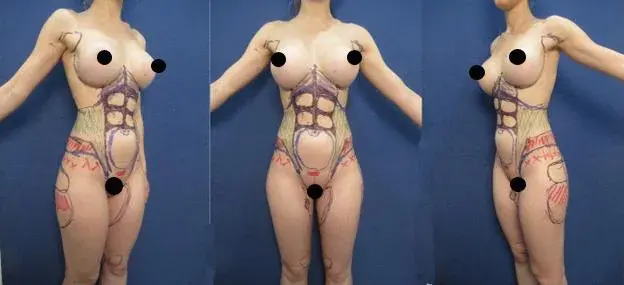
Planning the entire procedure in advance is particularly important when treating several areas in a single surgery. By anticipating how each area relates to the others, our surgeons can coordinate the various stages of contouring more efficiently and ensuring patient safety.
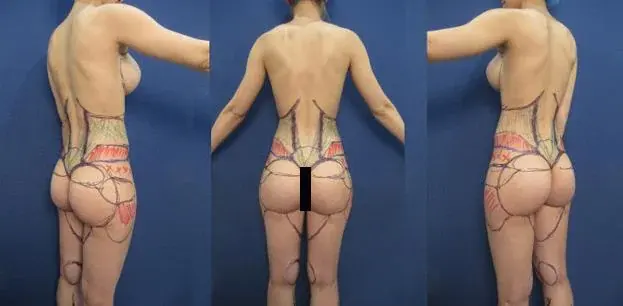
Our High-Definition Vertical Axillary Line protocol was developed to provide a consistent lateral anatomical reference for surgical planning by dividing the front and back halves of the body during circumferential body contouring.
Improving Precision During 360-Degree Contouring
The original purpose of the Vertical Axillary Line design was to establish a reference boundary between the anterior and posterior torso. During circumferential liposuction, this landmark can help guide instrument positioning and define the intended extent of treatment from each side.
This is particularly relevant when using elongated ultrasound probes and liposuction instruments around the waist and lateral torso. Without a clearly defined treatment boundary, excessive instrument reach or overlapping energy application may increase the risk of localized thermal injury, mechanical trauma, or uneven treatment.
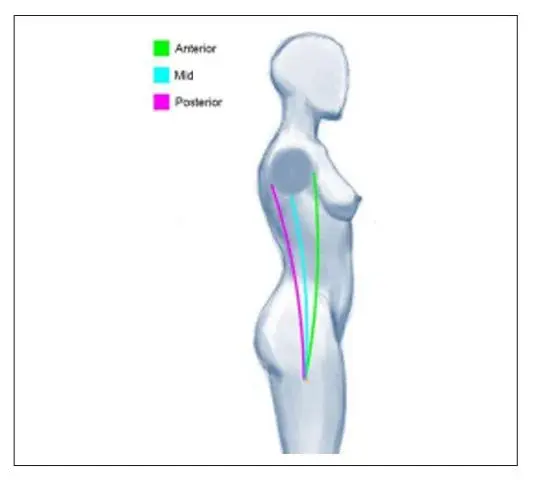
The Vertical Axillary Line provides a planning reference intended to help minimize unnecessary overlap and encourage controlled transitions between anatomical regions. Its position can be modified according to the patient's anatomy, gender-specific aesthetic objectives, and the surgical techniques being performed.
Protecting Important Anatomical Structures
The Vertical Axillary Line protocol also helps our surgeons plan around anatomical structures that may be vulnerable during combined body contouring procedures.
For example, patients undergoing abdominoplasty require surgical undermining of the abdominal skin. This can disrupt certain blood vessels supplying the abdominal tissues, making preservation of the remaining blood supply particularly important. Liposuction must therefore be more conservatively planned on the back side in order to conserve vascular perforators thus having our surgeons design a vertical axillary line that is positioned in the mid axilla rather than the routine anterior most line.
Patients with breast implants may present another consideration during circumferential contouring. In the prone position, breast implants can shift laterally, potentially increasing their proximity to instruments used during liposuction of the axilla or lateral chest. Adjusting the lateral treatment boundary to the posterior axillary position will minimize risk of inadvertent implant injury.
Gender-Specific Contouring
The Vertical Axillary Line offers additional value by helping surgeons plan the transition between the anterior and posterior torso according to the patient's desired aesthetic.
Female and male body contouring often involve different objectives. For example, female contouring emphasizes a more pronounced waistline narrowing which requires an anteriorly positioned vertical axillary line that allows for more aggressive liposuction of the waist from the backside. In contrast, male contouring prioritizes a broader upper-body proportions, a stronger abdominal torso, thereby dictating a more posteriorly positive vertical axillary line that results in more conservative waistline liposuction.
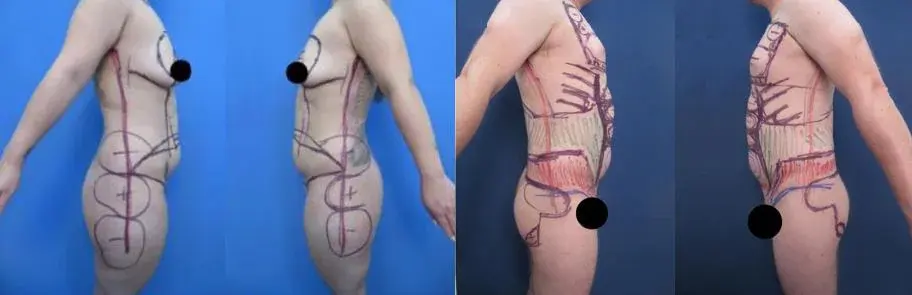
Adjusting the position of the Vertical Axillary Line helps our surgeons plan access to the lateral transition zones in a manner consistent with these differing goals. The landmark is one element of a broader surgical design rather than a fixed boundary applied identically to every patient.
Improved Incision Line symmetry for patients requiring Surgical Excisions
The vertical axillary line can also serve as a reference when planning excisional procedures. For tummy tucks, buttock lifts, and breast lifts, a clearly defined lateral landmark may help surgeons coordinate the length, position, and direction of the planned excisions so that there is improved symmetry in surgical lines.
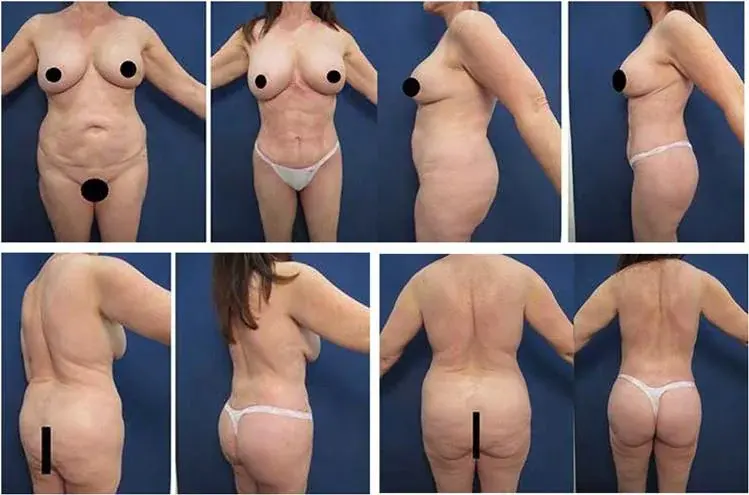
Its utility becomes even more apparent during procedures involving extended incisions that wrap around the sides of the body, including upper body lifts, lower body lifts, and extended abdominoplasties. In these cases, the landmark can help guide the design of corresponding incisions and support more symmetrical tissue removal and closure.
The objective of our Vertical Axillary Line protocol is to integrate aesthetic design, anatomical awareness, and procedural planning into a unified surgical strategy.
 (opens in a new tab)
Application of the Vertical Axillary Line for High-Definition Liposuction and Body Contouring was published in The American Journal of Cosmetic Surgery.
Circumferential Prepping and Draping
Maintaining a Sterile Field Throughout 360-Degree Surgery
High-definition body contouring is inherently three-dimensional. Achieving a balanced result requires the surgeon to evaluate and treat the body from the front, back, and all the way around rather than focusing on individual regions in isolation.
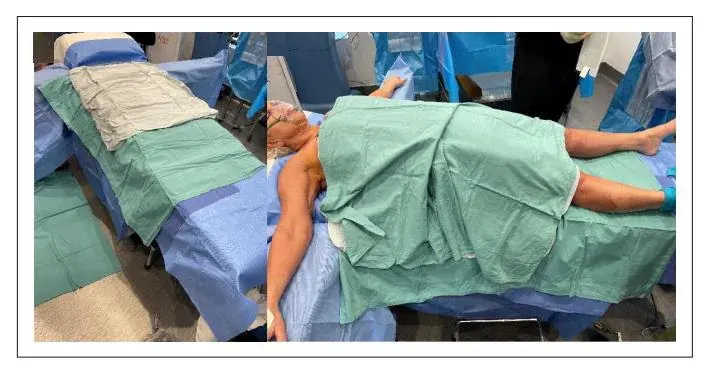
When the patient is positioned supine, the surgeon may address the abdomen, chest, and medial thighs. In the prone position, treatment may include the upper, middle, and lower back, buttocks, and posterior thighs. The flanks, lateral chest, axillae, and lateral thighs require access from both sides.
Consequently, all high-definition procedures that are 360 in scope require the patient to be repositioned during surgery. Each transition must be coordinated carefully to maintain patient safety, preserve the sterile field, and avoid unnecessary delays.
A More Efficient Prepping of the Patient
Conventional prepping dictates repeated skin cleaning and draping whenever the patient is turned. Depending on the procedure and the operating-room protocol, these repeated steps can add considerable time to a lengthy circumferential operation.
Our circumferential prepping and draping protocol is designed to prepare the relevant anatomical regions in advance, allowing the surgical team to access planned treatment areas while maintaining appropriate sterile barriers during repositioning.
By coordinating prepping, draping, and even equipment placement before the operation begins, our surgeons are able to reduce repeated setup steps and improve procedural efficiency.
Compression Coupling: Precision in Superficial Fat Sculpting
The Technique Behind Natural Shadows and Muscle Highlights
High-definition liposuction requires a carefully controlled balance between deep fat removal and selective superficial fat refinement. This balance is essential when the goal is to create natural shadows, accentuate muscular anatomy, and achieve smooth transitions between adjacent areas.
VASER ultrasound-assisted liposuction can help facilitate the disruption and extraction of adipose tissue. Following treatment of the deeper fat compartment, selected superficial regions may be refined to reveal underlying anatomical contours.
Our compression coupling technique is designed to help control this process.
How Compression Coupling Works
Compression coupling involves applying controlled external pressure to the soft tissues with the surgeon's non-dominant hand while manipulating the liposuction cannula with the dominant hand.
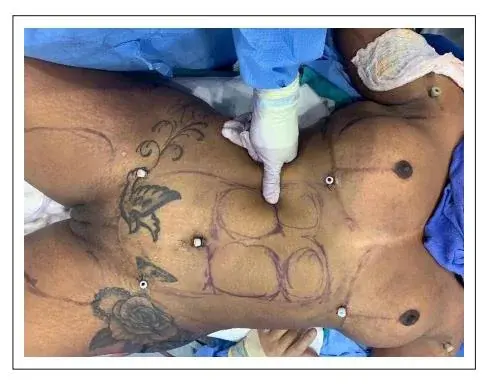
For example, the surgeon may use the thumb or other portions of the hand to apply pressure over a targeted superficial fat compartment. This maneuver changes the relationship between the superficial and deeper tissues, helping guide the fat into the cannula.
The degree and location of pressure are important. Selective superficial fat removal requires considerable judgment because the amount of fat removed influences the depth of the resulting contour, the appearance of muscular highlights, and the smoothness of surrounding transitions.
Insufficient pressure or poorly coordinated instrument movements may necessitate additional passes, potentially prolonging the procedure and increasing mechanical trauma. Conversely, excessive or improperly distributed pressure, combined with overly aggressive superficial fat removal, may contribute to contour irregularities or an unnatural appearance.
For this reason, compression coupling requires specialized training, anatomical understanding, and experience with high-definition sculpting techniques.
The objective is not simply to remove all of the superficial fat, but to control precisely how much superficial fat is removed and where it is preserved. This selective approach is central to creating refined contours while maintaining a natural-looking relationship between the skin, underlying fat, and muscular anatomy.
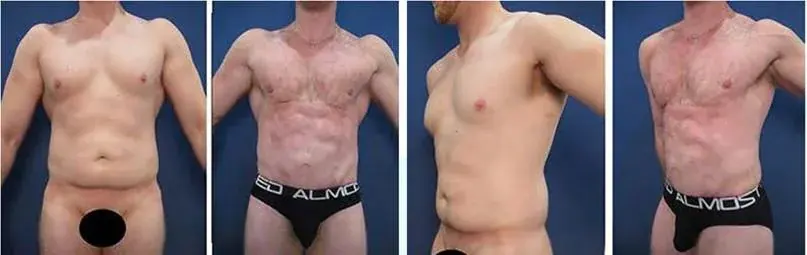
Ex-Vivo Liposuction
An Alternative Approach to Fat Removal from Tissues Designated for Excision
Ex-vivo liposuction is a technique in which liposuction is performed on selected soft tissues after they have been surgically removed from the body, rather than before their excision.
In conventional approaches, surgeons perform liposuction on tissues prior to being removed. With ex-vivo liposuction, the designated tissue is excised first and then treated outside the body. This approach may be incorporated into selected procedures involving substantial skin and soft-tissue removal.
The technique can also allow the surgeon to coordinate tissue excision, contour refinement, and closure of the resulting surgical defect within the overall operative plan.
Potential Advantages of Ex-Vivo Liposuction
1. Additional opportunities for fat harvesting
In selected patients, ex-vivo processing may allow adipose tissue to be harvested from excised tissue that would otherwise be discarded. This may be particularly relevant for patients with limited remaining fat reserves after massive weight loss.
The amount of usable fat depends on the patient's anatomy, the volume and quality of the excised tissue, and the suitability of the harvested material for grafting. Any planned fat transfer must also remain within appropriate patient-specific safety limits.
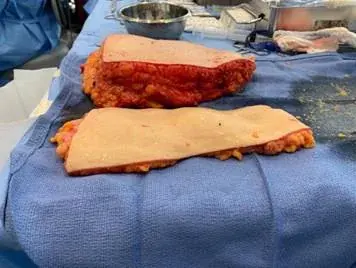
2. Increasing fat graft volume
Harvesting fat from excised tissues provides an additional source of harvesting adipose tissue for procedures such as Brazilian Butt Lift surgery or hip-dip augmentation. This is because there is a limit to how much tumescent solution can be used using conventional liposuction. Lack of adequate fat volume harvested is often a concern in massive weight loss patients.
3. Improved Fat Graft Quality
Because the technique is performed on tissue already removed from the body, the fat graft has less blood contaminants, as indicated by a lower hemolysis index.
Blood products act as inflammatory mediators that attract immune cells which ultimately result in less fat graft viability. Therefore, ex-vivo fat that is grafted back to the patient may result in the theoretically improved fat viability and volume retention following fat transfer.
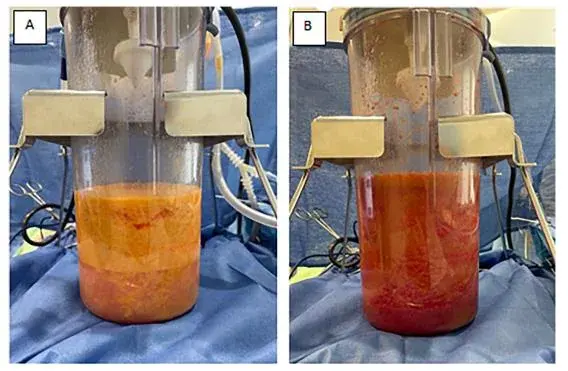
A Customized Surgical Application
Ex-vivo liposuction is not necessary or appropriate for every patient. Its role depends on whether the surgical plan includes tissue excision, whether the removed tissue contains suitable fat for harvesting, and whether fat transfer is indicated.
When appropriate, it provides our surgeons with an additional technique for integrating excisional body contouring with fat harvesting as part of a comprehensive surgical plan.
 (opens in a new tab)
Ex-Vivo Liposuction Optimizes High Definition Body Contouring was published in The American Journal of Cosmetic Surgery.
Modified Abdominal Skin Resection
Addressing Significant Abdominal Skin Redundancy
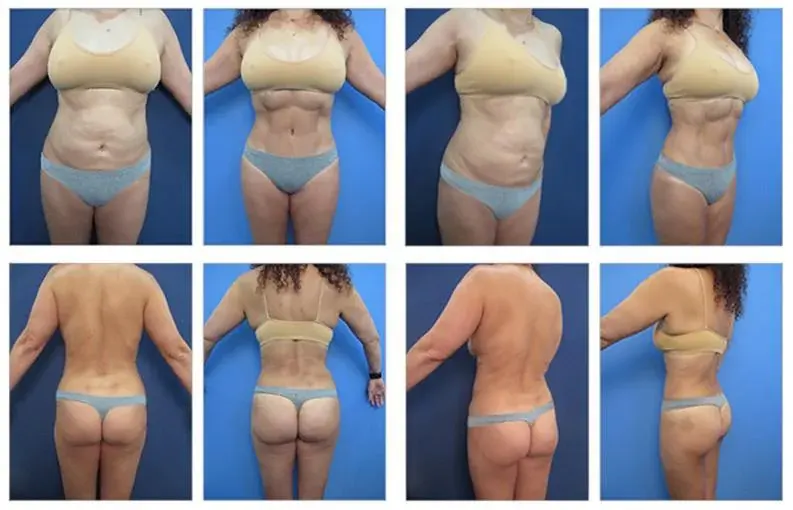
Patients with moderate to severe abdominal skin redundancy may require more than liposuction alone or even helium plasma-based radiofrequency to achieve their desired contour. When substantial loose skin is present, removing excess fat without addressing the redundant skin may leave an unsatisfactory result.
A traditional tummy tuck, or abdominoplasty, can address this problem by removing excess skin and, when indicated, repairing separated abdominal muscles. However, a conventional abdominoplasty involving extensive undermining can alter the blood supply to the abdominal skin.
Combining aggressive abdominal liposuction with extensive undermining and skin excision requires careful consideration of the remaining blood supply. In selected cases, performing these maneuvers together may increase the risk of wound-healing complications.
Our Modified Abdominal Skin Resection is a specialized approach developed by our surgeons to address abdominal skin redundancy while incorporating high-definition liposuction into the overall contouring plan.
An Alternative for Selected High-Definition Candidates
The objective of this technique is to remove significantly more excess abdominal skin than a mini tummy tuck while limiting the extent of undermining associated with a traditional tummy tuck. Preserving tissue attachments and blood supply is an important consideration when combining skin excision with abdominal liposuction.
For appropriately selected patients, this approach provides an opportunity to address both excess abdominal fat and redundant skin within a customized surgical strategy.
However, the technique is not suitable for everyone. The appropriate procedure depends on the distribution and severity of skin laxity, the patient's anatomy, previous operations, and whether abdominal muscle repair is required.
 (opens in a new tab)
Modified Abdominal Skin Resection: A Novel Approach to High-Definition Body Contouring of the Abdomen was published in The American Journal of Cosmetic Surgery.
Why Muscle Integrity Matters
A key consideration during your consultation is the condition of the underlying abdominal wall.
Patients with significant abdominal muscle separation or other structural concerns may require formal muscle repair, which can influence the choice of procedure and the extent of safe concomitant liposuction. A modified skin-resection technique should not be considered a universal substitute for traditional abdominoplasty when muscle repair or more extensive correction is indicated.
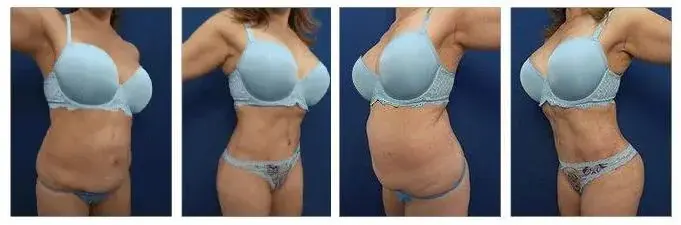
The goal is to expand the possibilities for high-definition abdominal contouring without compromising sound surgical judgment. For carefully selected patients, high definition body contouring provides a tailored alternative to traditional abdominoplasty alone by addressing the combined concerns of abdominal fat excess, and severe skin redundancy.
(opens in a new tab)Modified Abdominal Skin Resection: a Novel Approach to High-Definition Body Contouring of the Abdomen was published in The American Journal of Cosmetic Surgery.
Integrating Our Protocols in Your Surgical Journey
Our proprietary high-definition liposuction protocols are intended to work together rather than as isolated techniques. Their value lies in coordinating preoperative assessment, surgical design, intraoperative execution, and postoperative care around your individual anatomy and goals.
We will discuss the perioperative measures selected for your needs, which may include nutritional and medical optimization, circumferential prepping and draping, compression coupling, closed-loop fat grafting, ultrasound-guided fat injection, and ex-vivo liposuction.
Finally, we will explain your postoperative care plan, including the recommended monitoring schedule, follow-up evaluations, and measures to identify and address potential complications promptly. Depending on your procedure, postoperative care may also include compression garments, activity guidance, and selected lymphatic drainage treatments when clinically appropriate. Every component is selected according to your surgical plan, medical history, and recovery needs.
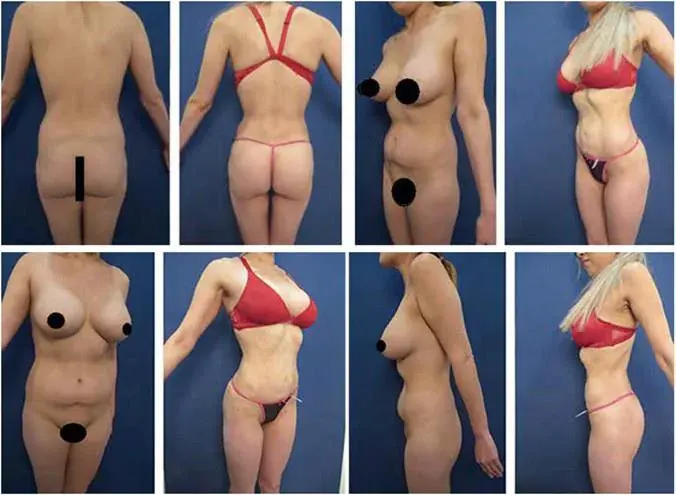
Our philosophy is straightforward: exceptional contouring begins with comprehensive planning, depends on meticulous technique, and requires attentive postoperative care. By integrating these elements into a customized approach, we aim to achieve refined, balanced, and anatomically appropriate results while keeping patient safety central to every decision.